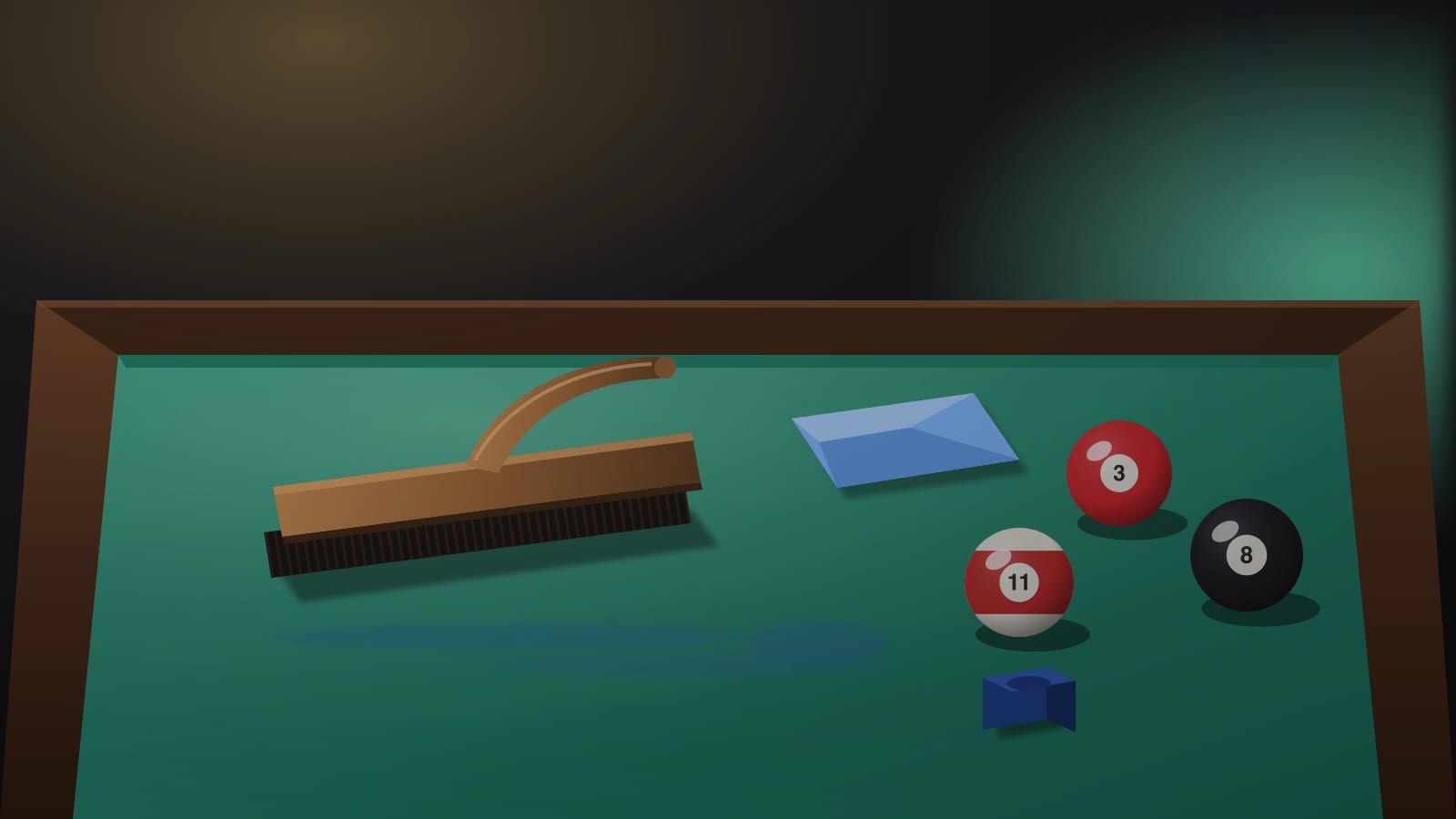
To clean pool table felt, brush it in straight strokes from the head rail toward the foot rail with a proper table brush, sweep the chalk dust off at the foot, vacuum gently with no rotating brush, and lift any stains by dabbing with a cloth dampened in cold water. Never scrub, never soak, and never apply heat. Do that once a week on a home table and the cloth will play true for years. Below is the full routine, why each step matters to how the balls roll, and how to look after the balls and rails while you are at it.
01
Why a dirty table plays differently
Pool cloth is wool, or a wool and nylon blend, and the thing that wears it out is chalk. Cue chalk is a fine abrasive, and every shot leaves a little on the cue ball that then grinds into the fibres as the ball rolls. Add room dust, skin oil from hands, and the occasional drink, and within a few months an uncleaned table has a layer of grit that changes how it plays.
Dirty cloth has more rolling resistance, so balls stop short of where you expect and position play drifts. Chalk on the balls makes them grip each other at contact, which increases throw, the small sideways push an object ball picks up from friction when it is cut. A chalk smudge at the exact contact point can produce a skid, where the object ball momentarily sticks to the cue ball and leaves at the wrong angle. A simulated table like the one in Duel never changes from one frame to the next; a real one is quietly getting slower and less predictable every week it goes unbrushed. Cleaning is how you keep the real table honest.
02
Brushing: the one job that matters most
Use a brush made for pool tables, with soft bristles and a wide head. A household brush is too stiff and will raise the fibres. Start at the head of the table, the end you break from, and brush in straight, overlapping strokes toward the foot rail, always in the same direction. Do not brush in circles and do not scrub back and forth, which lifts the fibres and works the chalk deeper instead of moving it along. Light pressure is enough; you are sweeping, not scouring.
When the whole bed has been swept, you will have a line of chalk dust at the foot rail. Brush it onto a sheet of paper or into a dustpan, or pull it into a corner pocket and empty the pocket, rather than flicking it back onto the cloth. Then do the strip under each cushion with a small rail brush, pushing the dust out from under the rail toward the centre and sweeping it up.
Direction matters more on napped cloth than on worsted. Napped cloth, the fuzzier kind on most home and bar tables, has fibres that lie one way, and brushing head to foot lays them flat so the ball rolls consistently. Worsted cloth, the smooth, fast kind used in tournaments, has no nap and is more forgiving, but the same straight head-to-foot stroke is still the right habit.
03
Vacuuming: gentle, straight, and no spinning parts
A vacuum picks up what brushing loosens but cannot fully lift, especially on napped cloth where chalk settles between the fibres. The rules are simple. Use a hand vacuum or a canister vacuum with a plain upholstery nozzle. Never use an upright with a beater bar or a power head with a rotating brush, which will pull fibres out and can catch a seam. Keep suction low or moderate; if the cloth is lifting toward the nozzle, it is too strong and is stretching the cloth against its staples.
Move in straight passes in the same head-to-foot direction you brush, and go lightly around the pockets, where the cloth is cut and glued and the edges can fray if they are tugged. Once a month is plenty for a home table that is brushed weekly.
04
Chalk marks and the blue line along the rails
Loose chalk comes off with the brush. The blue that stays is chalk that has been pressed into the fibres by the weight of the balls, and it is thickest in the lanes along each rail and around the head spot where the cue ball is placed for the break. To lift it, wring a microfiber cloth out in cold water until it is barely damp, lay it on the mark, and press and lift. Work from the outside of the mark toward the centre so you do not spread it. Do not rub, which pushes the pigment deeper and roughens the surface.
For marks that a damp cloth will not shift, a rubber cloth-cleaning block or one of the reusable billiard cloth cleaners sold for the purpose will pull the residue out without water. Avoid anything with bleach, solvents, or spray-on upholstery foam; these strip the dye and leave a stiff patch that plays differently from the rest of the bed. The best fix is prevention. Chalk your cue away from the table, set the chalk down on the rail with the open side up, and keep it off the cloth entirely.
05
Spills: blot, cold water, and no heat
Speed is everything with a spill. Press a dry, absorbent cloth onto it straight away and keep blotting with fresh, dry sections until nothing more transfers. Then dab with a cloth dampened in cold water, and blot dry again. Only if the spill was sugary or coloured, add a single drop of mild dish soap to the water, dab, then dab again with plain water to take the soap back out. Soap left in the cloth attracts dirt and leaves a tacky spot.
Let the area air dry on its own. Never use a hairdryer, a heater, or direct sunlight to speed it up; wool shrinks and ripples under heat, and a wet stain that is heated is a stain that is set for good. Do not play on a wet patch, because a ball rolling over damp cloth will leave a track in the fibres.
06
The balls and the rails
Clean balls keep clean cloth. Every ball that goes back on a freshly brushed table carrying a film of chalk puts that chalk straight back into the fibres, so wash the set every month or two. Warm water, a few drops of mild dish soap, a soft cloth, a rinse, and a towel dry before water spots form is all a phenolic ball set needs. For a deeper clean, a cleaner made for billiard balls and a buff with a microfiber cloth brings back the gloss that makes chalk slide off instead of sticking. Never use scouring pads, bleach, or solvents; they dull the surface and a dull ball collects chalk faster.
Wipe the wooden rails with a cloth that is barely damp, then dry them. If you use a furniture polish, apply it to the cloth, not the rail, so none of it reaches the playing surface; polish on cloth leaves a slick, dirty-looking stripe that never comes out. Leave the cushion rubber alone. Oils and silicone sprays that are sometimes recommended for rubber will change how the cushions rebound and will migrate onto the cloth over time.
07
How often, and when cleaning is no longer enough
A home table that sees a few sessions a week needs a brush after each session or at least weekly, a vacuum monthly, the balls washed every month or two, and a cover whenever it is not in use. A cover is the single most effective thing on that list, because the dust that settles on an uncovered table overnight is dust you will otherwise be grinding into the cloth with the next rack.
Cleaning cannot reverse wear. When the cloth has shiny, flattened tracks along the rails, pills of fibre you can pick off, bald patches at the head spot, a burn mark from a miscue, or balls that visibly drift off a slow straight roll, it is time to recloth. Well kept home cloth lasts five years or more; a busy bar table might need recloth every year. Until then, a brush, a cloth, and five minutes a week keep the table playing the way it did when the cloth was new.
08
Common questions
How do you clean pool table felt?
Brush the cloth with a dedicated pool table brush in straight, overlapping strokes from the head of the table toward the foot, sweep the pile of chalk dust off at the foot rail, and brush under the cushions with a small rail brush. Follow with a gentle vacuum using a hand vacuum or an upholstery nozzle with no rotating brush. Lift any remaining chalk marks by dabbing with a microfiber cloth dampened in cold water, and let the cloth air dry before playing on it.
Can you vacuum a pool table?
Yes, as long as the suction is gentle and nothing spins against the cloth. Use a hand vacuum or a canister with a plain upholstery nozzle, never a beater bar or a rotating brush head, and move in straight passes in the same direction you brush. Vacuuming is a supplement to brushing, not a replacement for it, because the brush is what lifts chalk out of the fibres.
How do you get chalk out of pool table felt?
Brush first, because most chalk is sitting loose on the surface and a brush removes it without water. For the blue marks that remain, dab with a microfiber cloth wrung out in cold water, working from the outside of the mark inward, and never scrub or soak the area. A rubber cloth-cleaning block or a reusable cloth cleaner designed for billiard tables will lift the stubborn residue that a damp cloth leaves behind.
How do you clean a spill off pool table felt?
Blot immediately with a dry, absorbent cloth and keep blotting until nothing more transfers. Then dab with a cloth dampened in cold water, adding a drop of mild dish soap only if the spill was sticky or coloured, and blot again with a dry cloth. Let it air dry with no heat, because a hairdryer or a hot room can shrink or ripple the wool and set the stain.
How often should you clean a pool table?
Brush a home table after every session or at least once a week, vacuum it gently about once a month, and wash the balls every month or two. A commercial room with tables in use all day should brush every day. Keep the table covered when it is not in use, which cuts the dust that settles into the cloth between cleanings by more than any amount of brushing can.
How do you clean pool balls?
Wash them in warm water with a few drops of mild dish soap, rub each ball with a soft cloth, rinse, and dry it straight away so no water spots form. For a deeper clean, use a cleaner made for phenolic billiard balls and buff with a microfiber cloth. Never use abrasive pads, bleach, or solvents, which dull the surface and make the balls pick up chalk faster.