

News from
the felt
Development stories, design decisions, and table talk from the team building Duel: 8 Ball Pool.
Read the latestFrom the table
Game notes. No press-release fog.

Rules
Pool terms: a glossary of 40 words every player should know
The vocabulary nobody explains. Forty terms grouped by where you meet them — the table, the balls, the shots, the spin, the rulebook, and the strategy.
Read story
Technique
The stop shot in pool: why the cue ball slides before it rolls
A stop shot only works while the white is still sliding. What the slide is, how far it lasts, and why the same shot dies close up and runs on from distance.
Read story
Technique
Safety play in pool: how to win by leaving nothing
The turn you cannot convert is still worth something. How to make a legal safety, which blocker to pick, and the three ways a safety backfires.
Read story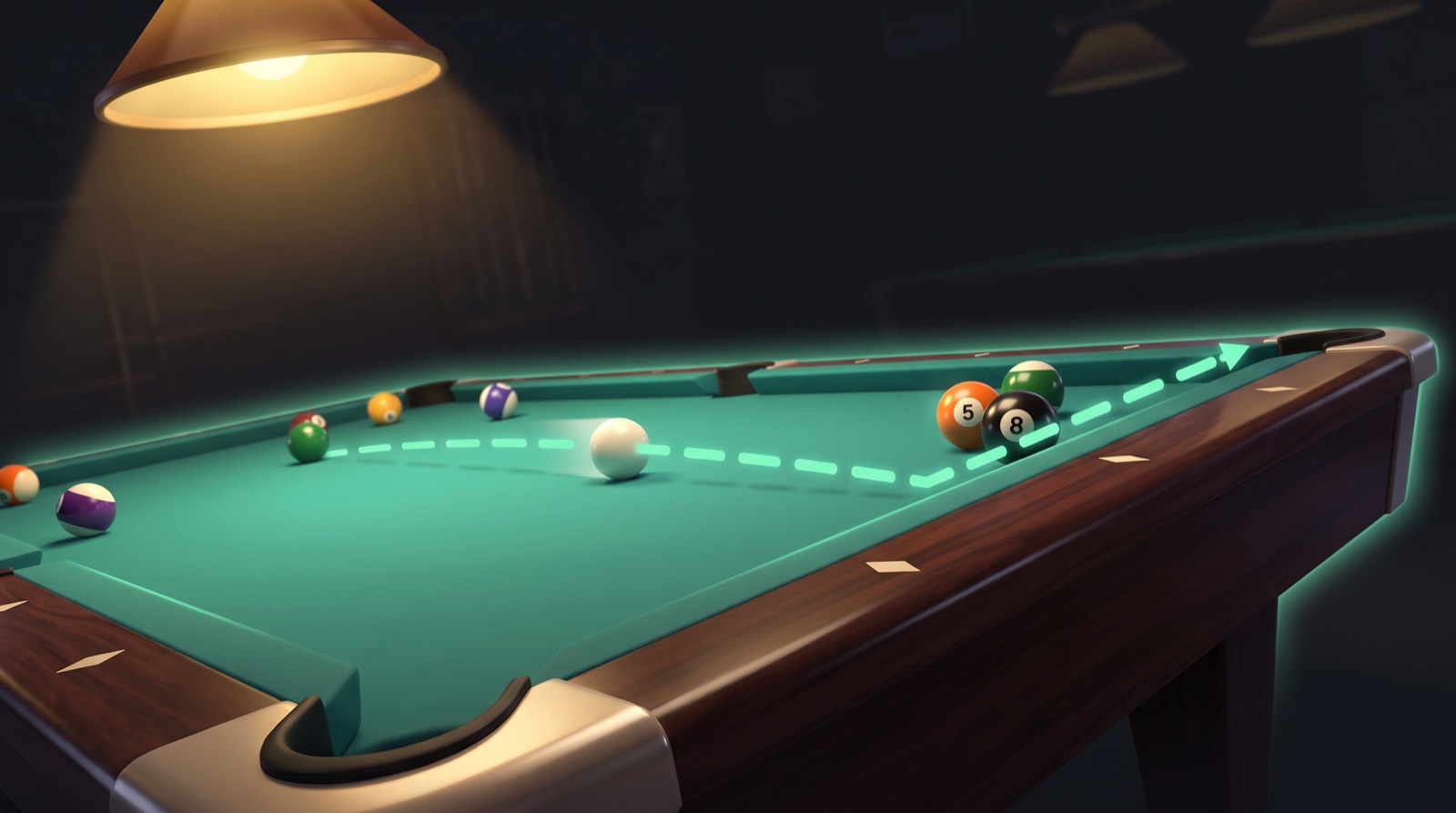
Technique
Kick shots in pool: how to escape a snooker legally
Mirror your target through the rail and drive the cue ball at the reflection. The legality trap that turns good escapes into fouls, and how to kick safe.
Read story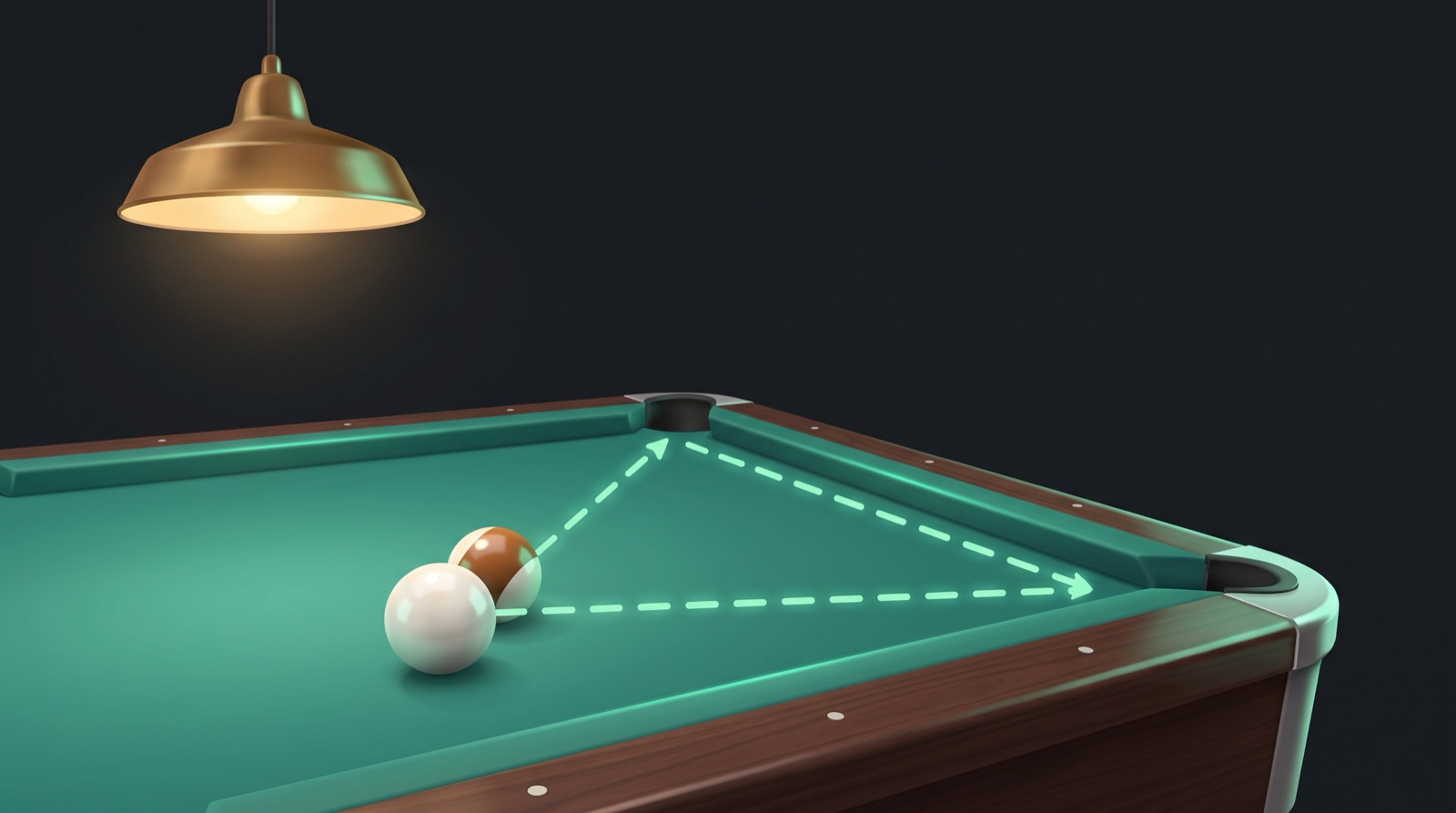
Technique
Bank shots in pool: the mirror trick for finding the angle
Mirror the pocket through the cushion and aim at the reflection. Why hard banks come up short, what cut-induced spin does, and which bank to learn first.
Read story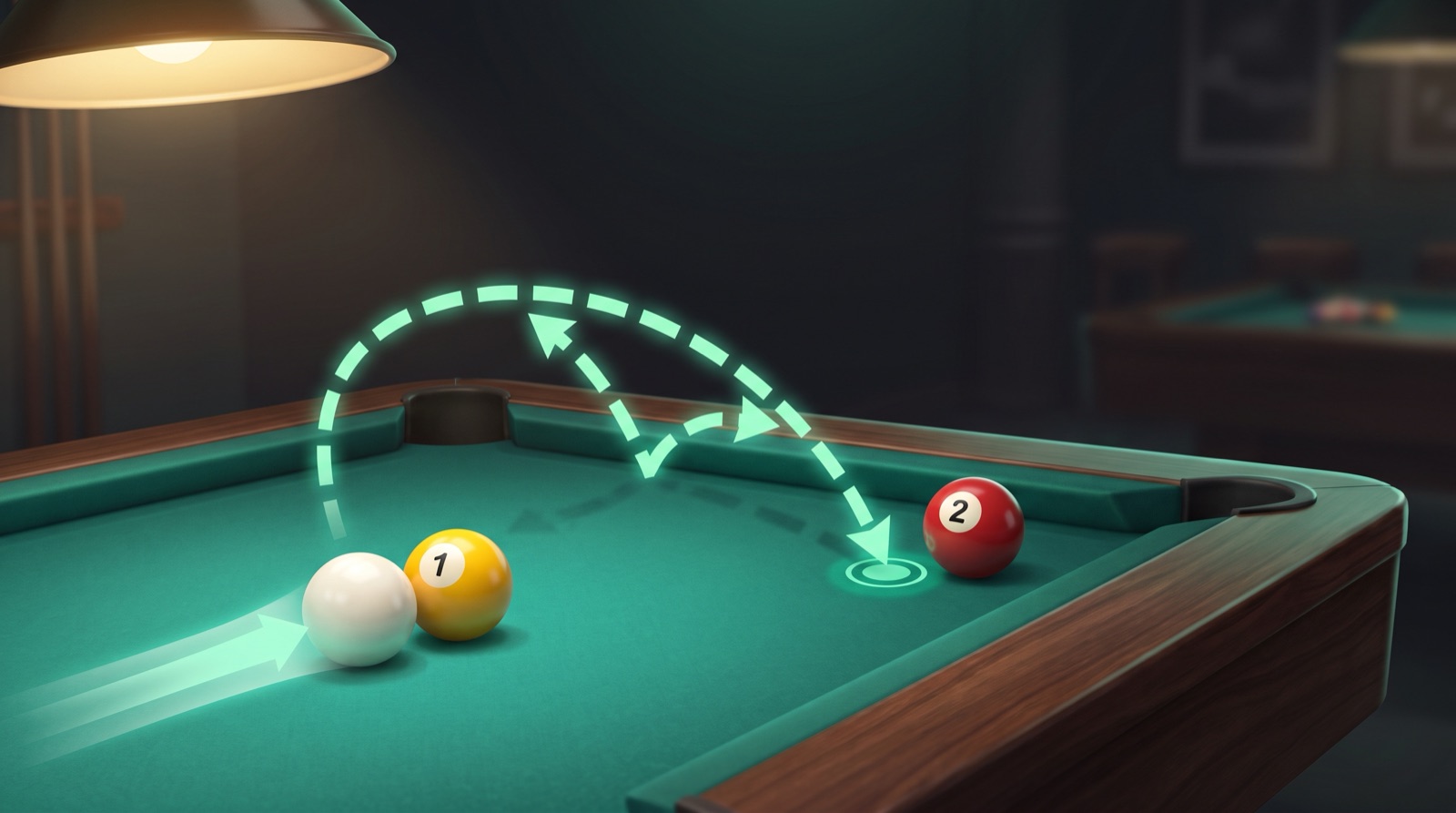
Technique
Cue ball control: thinking one shot ahead
Where the white stops is a decision, not luck. The tangent line, why speed beats spin, and why you should aim for a zone instead of a spot.
Read story
Technique
Why your draw shot isn’t drawing back
Four causes, one diagnosis. Tip height, cue elevation, a stroke that stops at the ball, and the distance that quietly eats your backspin.
Read story
Technique
How to break in 8-ball and actually pot something
Hit the head ball dead full with a level cue at about eighty per cent. Why the rack matters more than your arm, and where the cue ball should end up.
Read story
Technique
How to aim in pool: the ghost-ball method, explained simply
Put your cue ball's centre where a phantom ball would sit against the object ball. How to find that spot, the half-ball shortcut, and why good aim still misses.
Read story
Rules
Stalemates and re-racks: when nobody can shoot
A warning, three more turns each, then a fresh rack and no winner. What counts as no progress, and why the original breaker breaks again.
Read story
Rules
The three-foul rule in pool, explained
Three fouls in a row loses the game — but only for the same player, only with nothing legal in between, and only if you were warned.
Read story
Technique
How to put spin on the cue ball: draw, follow, and english
Above centre for follow, below for draw, left or right for english. What each one does, why draw fades with distance, and the two costs of sidespin.
Read story
Rules
Casual vs tournament 8-ball rules, side by side
Two rules that matter and five that cause arguments. Call-shot, the three-foul rule, and every place bar 8-ball quietly disagrees with the published book.
Read story
Rules
Solids or stripes: how groups are actually decided
The break assigns nothing. What an open table means, the shot that closes it, and why a foul leaves the choice with your opponent.
Read story
Rules
What is a legal break in 8-ball?
Pocket a ball or drive four object balls to a cushion. What counts, what an illegal break hands your opponent, and the truth about the 8 on the break.
Read story
Rules
Do you have to call your shots in 8-ball?
Official rules call every shot; bar rules call only the 8. What a legal call actually contains, and what happens when the ball drops elsewhere.
Read story
Rules
What happens if you scratch on the 8-ball?
It only loses the game if the 8 goes down on the same shot. The official rule, the break exception, and where bar rules disagree.
Read story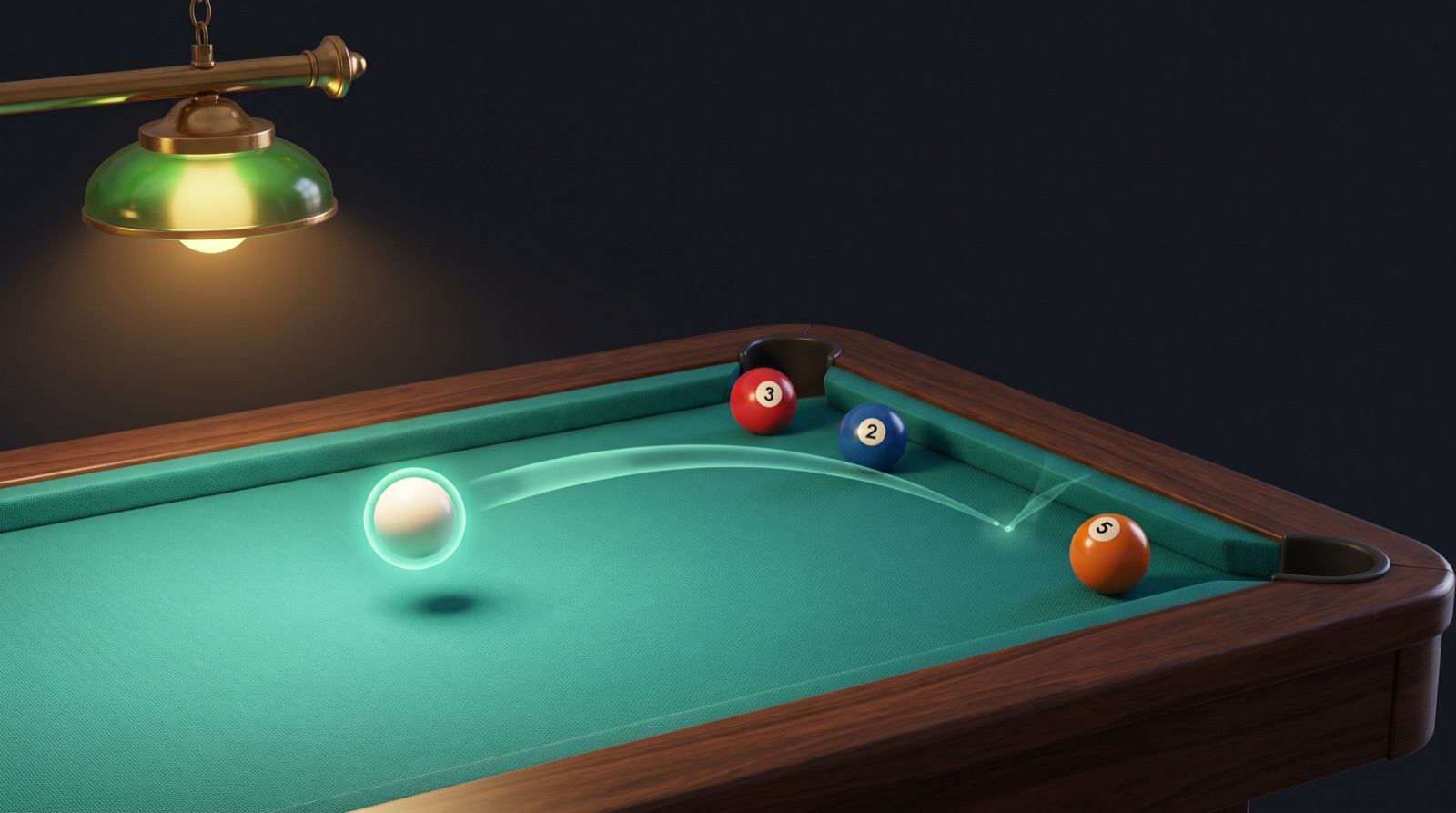
Rules
Ball in hand: what it means and how to use it
The free cue ball is the biggest gift in a rack. Where you can place it, the one restricted version, and how to spend it on the second shot.
Read story
Rules
How to play 8-ball: the complete rules for beginners
The rack, a legal break, picking solids or stripes, every foul, ball in hand, and the called pocket that wins it.
Read story
Player’s guide
What makes a great 8 ball pool game for iPhone?
The practical test: believable physics, readable controls, real ways to play, and progression that respects the table.
Read story
Modes
Three ways to play. One honest table.
Take on the house, pass the phone, match through Game Center, or stay late and drill the shot.
Read story
Economy
Rewards without the spin
Fixed prize ladders, published challenges, and a comeback stack when the bankroll hits zero.
Read story
Game design
Why Every Cue Shows Its Work
Guide, Control, Power, and Spin are printed on every cue card, because competitive gear should be clear before the match begins.
Read story